
Seasons at a glance
| Season | What to expect | Good for |
|---|---|---|
| Autumn (Sep to Nov) | Clear skies after the rains, busy trails | Almost every trek |
| Spring (Mar to May) | Warmer, blooming forests, some haze later | High routes and climbing peaks |
| Winter (Dec to Feb) | Cold, quiet, snow on high ground | Lower treks |
| Monsoon (Jun to Aug) | Rain, cloud, leeches and landslides | Rain-shadow regions and city trips |
Autumn: September to November
Autumn is widely regarded as the best trekking season. The monsoon has cleared the air, so mountain views are often sharp, and temperatures are comfortable at lower levels. Nepal's biggest festivals, Dashain and Tihar, usually fall in this period too.
It's also the busiest time. Nepal Tourism Board figures show October was the country's busiest month in 2025, with 128,443 visitors. Book flights and lodges early. Early September can still bring monsoon rain, so mid-September onward is safer. Check the UK government's warning that the monsoon can normally last to October.
Good choices: Everest Base Camp, Annapurna Base Camp, Annapurna Circuit and Manaslu Circuit.
Spring: March to May
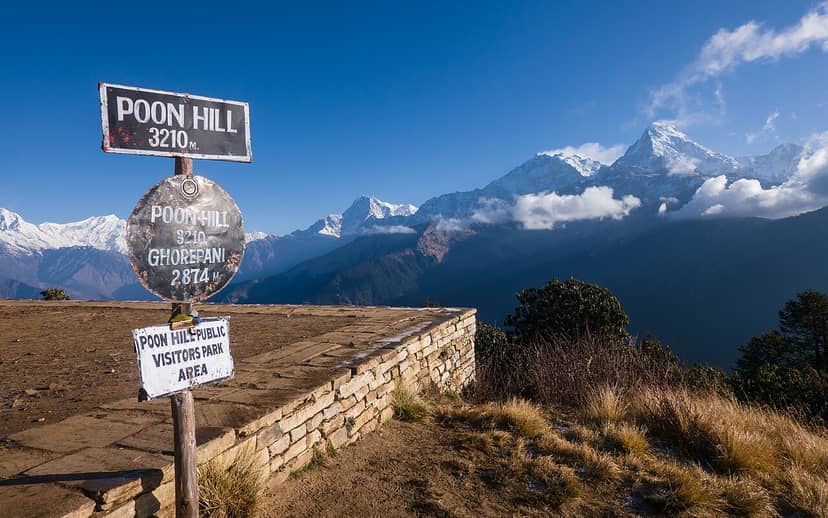
Spring is the second main season. Forests turn red and pink with rhododendron, especially on mid-level routes such as Poon Hill. Days are warmer, and it's the classic season for climbing expeditions. March was Nepal's second-busiest month in 2025.
Haze tends to build as spring goes on, so distant views may be softer. Pre-monsoon showers are possible from late May.
Good choices: Ghorepani Poon Hill, Langtang Valley, Island Peak and Mera Peak.
Winter: December to February
Winter is quiet and often clear, but cold, especially at night. Deep snow can block paths above Tengboche on the Everest route, some high lodges close, and high passes such as Thorong La and Larkya La can become dangerous or impassable.
Lower routes are a good choice, because you avoid crowds and still get good views. Pack properly and be ready to change your plans.
Good choices: Ghorepani Poon Hill, Everest Panorama, Helambu and Chitwan safaris, because the lowlands are much more comfortable at this time.
Monsoon: June to August
Travel sources put the monsoon from about late June to late September, bringing around 80% of Nepal's annual rainfall. The UK government describes it as normally running from June to October and warns of flooding and landslides that can make roads impassable. Trails get muddy, leeches appear in lower forests, and clouds often hide the peaks. Lukla flights can be delayed for days.
The exception is the rain shadow north of the main Himalayan range, where far less rain falls. Upper Mustang, Upper Dolpo and Nar Phu can be good at this time, although getting there can still be affected by weather. You may also enjoy Kathmandu Valley's heritage sites.
Which month is best?
| If you want | Choose |
|---|---|
| The clearest mountain views | Mid-October to mid-November |
| Rhododendrons in bloom | March to April |
| Fewer people, with a reasonable chance of good weather | Late November or early March |
| The quietest lower trails | December to February |
| A summer holiday trek | June to August, in a rain-shadow region |
Month by month
| Month | What to expect |
|---|---|
| January | Cold and often clear, with snow on high routes. Good for lower treks and the lowlands. |
| February | Still cold, gradually warming. Passes may remain snowbound. |
| March | Spring season begins, busy, with rhododendrons starting on lower slopes. |
| April | Warm and popular, with blossoms in the forests. Haze can increase. |
| May | Warmer and hazier, with showers possible ahead of the monsoon. Hot in the lowlands. |
| June to August | Monsoon. Best suited to rain-shadow regions. |
| September | Rain fades through the month. Trails get busier towards the end. |
| October | Peak season, often very clear. Book early. |
| November | Clear, colder and a little quieter, and a great time for mountain views. |
| December | Clear but cold. Check lodge availability on high routes. |
Don't forget the festivals
Dashain and Tihar usually fall in autumn, and they're Nepal's biggest holidays. They're a wonderful time to see local life, but offices may close and transport can be busier as people travel home. Festival dates follow the lunar calendar and change each year, so check the dates for your trip.
Common questions
Which is better, spring or autumn?
Choose autumn for clearer views, and spring for warmer days, flowers and the climbing season at Everest. Both are excellent.
Can I trek in the monsoon?
Yes, on the right routes and with care. Rain-shadow regions are the usual choice, and you should keep plenty of spare time for transport delays.
When is it least crowded?
Winter and the monsoon are the quietest. If you want good weather too, try late November or very early spring.
What's the best time for Chitwan?
Autumn to spring is generally the most comfortable time, because summer is very hot and some areas may close during the monsoon.
Don't forget the altitude
Whatever the season, conditions change quickly in the mountains. The UK government notes that hazards exist all year, especially above 3,000 m. Always keep some spare days, and see our guide to altitude sickness.
Next steps
Explore treks by season on our Seasons page, or tell us when you're free and we'll suggest routes that suit your dates.


Comments