
There's no official difficulty scale for Nepal treks. This ranking is our own judgement, based on maximum altitude, trekking days and the type of trail.
The ranking at a glance
| Rank | Trek | Highest point | Our itinerary |
|---|---|---|---|
| 1 | Nagarkot to Chisapani | About 2,175 m | 3 days |
| 2 | Ghorepani Poon Hill | 3,210 m | 9 days, with 4 trekking |
| 3 | Mohare Danda | About 3,300 m | 9 days, with 5 trekking |
| 4 | Tamang Heritage Trail | About 3,800 m (route dependent) | 9 days, with 5 trekking |
| 5 | Helambu | 3,640 m | 8 days, with 6 trekking |
| 6 | Everest Panorama | 3,860 m | 10 days, with 7 trekking |
1. Nagarkot to Chisapani
A very short walk along the rim of the Kathmandu Valley, linking sunrise viewpoints with Newar and Tamang villages. There's no high altitude to worry about. Mountain views depend on the weather, because haze is common outside autumn and winter. It's ideal for families, or for anyone with limited time.
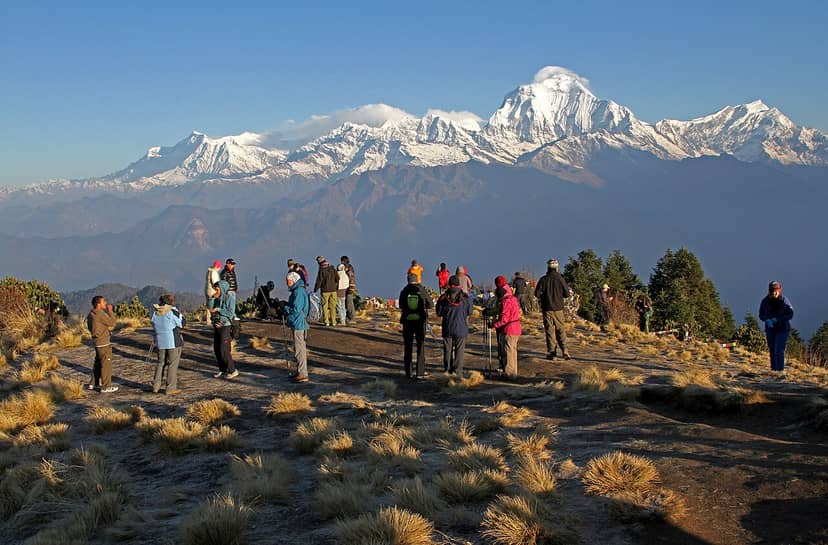
2. Ghorepani Poon Hill
The classic first Himalayan trek, famous for its sunrise over Dhaulagiri and Annapurna. Lodges are plentiful, and the forest turns red and pink with rhododendron in spring. The catch is the thousands of stone steps up to Ulleri, which surprise many people. Our beginner's guide helps you prepare.
3. Mohare Danda
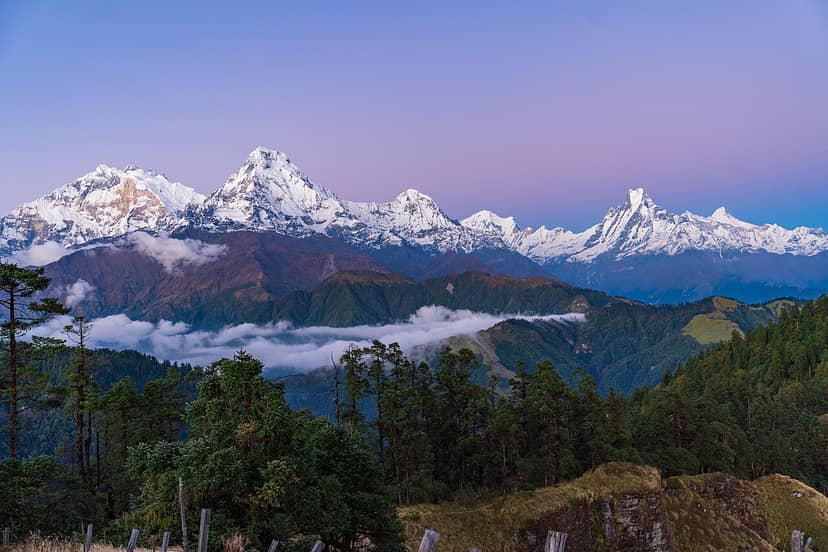
A quieter alternative to Poon Hill, with community-run lodges that support local villages, and similar views. It's usually less crowded, although facilities are simpler.
4. Tamang Heritage Trail
This one's more about culture than about high peaks. You stay in Tamang villages, visit hot springs, and take in big views of Langtang from high meadows. Nights can be simple, and you'll cross some higher ground, but days are moderate.
5. Helambu
This walk starts near Kathmandu, so you don't need a long drive. It stays below about 3,700 m, with no high passes, and passes through Hyolmo Sherpa villages. It has plenty of ups and downs, which makes it harder than it looks on paper.
6. Everest Panorama
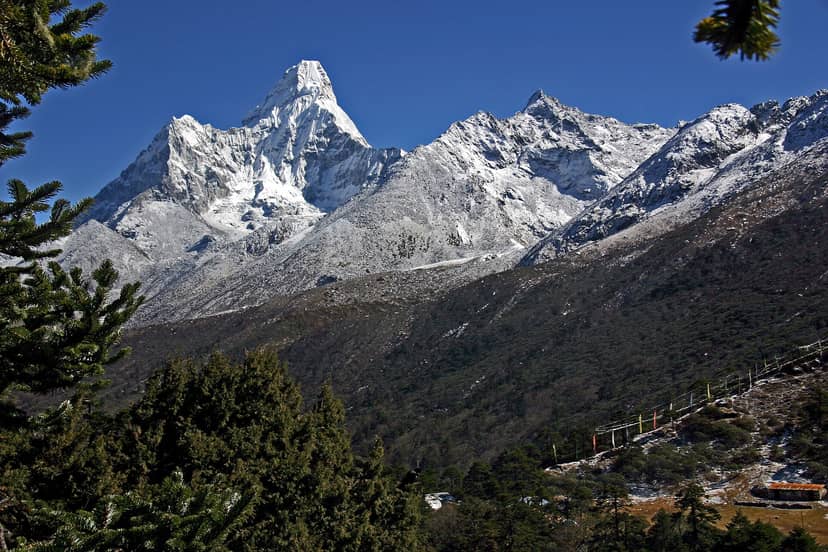
Everest views and Sherpa culture without the serious altitude of Base Camp. It's the highest and most expensive on this list, because it needs flights to Lukla and goes to 3,860 m. It suits people who really want the Everest region but not the full trek.
What "easy" really means
- Stairs: many routes have long stone staircases that are hard work, particularly on the knees going down.
- Altitude: even 3,000 m can affect some people, and fitness doesn't protect you.
- Consecutive days: walking several days in a row is the real test.
- Comfort: lodges are simple, and nights can be cold.
How to pick
- Bringing children or older relatives: Nagarkot to Chisapani.
- Want the classic experience: Poon Hill.
- Prefer fewer people: Mohare Danda.
- Love village culture: Tamang Heritage Trail.
- Want to avoid domestic flights: Poon Hill, Helambu or the Tamang trail.
- Must see Everest: Everest Panorama.
When to go
Spring and autumn are the most reliable times. Lower routes like Poon Hill and Helambu can also work well on clear winter days. Avoid the monsoon for your first trek, because of rain, leeches and landslide risk. See our season guide.
How to prepare
- Practise long walks with a daypack, including stairs or hills.
- Wear your boots in well before you go.
- Pack warm layers, even for low routes in spring or autumn.
- Check that your insurance covers your route's maximum altitude.
A sample easy trip: Poon Hill
To show what "easy" looks like in practice, here's the walking on our Ghorepani Poon Hill itinerary:
| Trekking day | Route | Walking |
|---|---|---|
| 1 | Nayapul to Ulleri (long stone stairway) | About 4 hours |
| 2 | Ulleri to Ghorepani | About 5 hours |
| 3 | Poon Hill sunrise, then Tadapani | About 6 hours |
| 4 | Tadapani to Ghandruk | About 4 hours |
So even an easy trek involves several hours of walking each day. Training with long walks and stairs really pays off.
What about altitude on easy treks?
Most routes here stay at or below about 3,800 m, and that's a real advantage, but it doesn't remove the risk. Some people can feel unwell above about 2,500 m. If you get a headache, nausea, dizziness or unusual tiredness, tell your guide and don't go higher to sleep. Read our altitude sickness guide.
Do easy treks cost less?
Generally, yes, because they take fewer days and most don't need mountain flights. The Everest Panorama is the exception, since it uses Lukla flights. Ask your operator for current prices, and check what's included, particularly transport and permits.
Common questions
What's the easiest trek with big mountain views?
Poon Hill is the usual answer, because you get a wide Himalayan panorama for fairly little time and altitude.
Can children do these treks?
Many families do lower routes such as Nagarkot to Chisapani or Poon Hill. Get medical advice first if you're taking children to altitude, and go at their pace.
Do I need a guide on an easy trek?
Rules vary by area and sources conflict. See our guide. For a first trek, we'd recommend one anyway.
Next steps
Browse all our trips, or tell us about your group and we'll suggest a route.


Comments