
This topic changes and sources conflict, so we state below what's clear and what isn't. Always check the current position with the Nepal Tourism Board or a registered agency before you travel.
What the rule says
The Nepal Tourism Board's requirement was widely reported in 2023. From 1 April 2023, foreign trekkers on listed national park and conservation area routes were required to travel through a government-registered agency with a licensed guide. Some sources date it to 31 March. The reasons given were trekker safety and local employment.
The UK Foreign, Commonwealth and Development Office (FCDO) currently tells travellers: "All foreign independent trekkers (FITs) must use a local guide or porter" in national parks and protected areas. It warns that ignoring these requirements can lead to fines or removal from protected areas, and it also says, "Do not trek alone."
Where sources disagree
| Question | What we found |
|---|---|
| Guide or guide-or-porter? | Most operator pages say a licensed guide. The FCDO says a local guide or porter. |
| Everest region (Khumbu) | Many operators say the rule applies. Wikivoyage reports that, as of 2026, the local community still permits independent hiking. |
| Groups | One source says groups may travel without a guide, while others say the rule applies to everyone. |
| Enforcement | Reported as uneven, varying by region and checkpoint. No published fine was found. |
| Which trails | The rule is reported to apply to listed routes. Reports describe about 14 regions or about 44 routes. |
We couldn't confirm these points against an official Nepal Tourism Board document, because we weren't able to access a current official rule text. Operators, including us, also have a commercial interest in this subject, so it's sensible to check for yourself.
Restricted areas are different
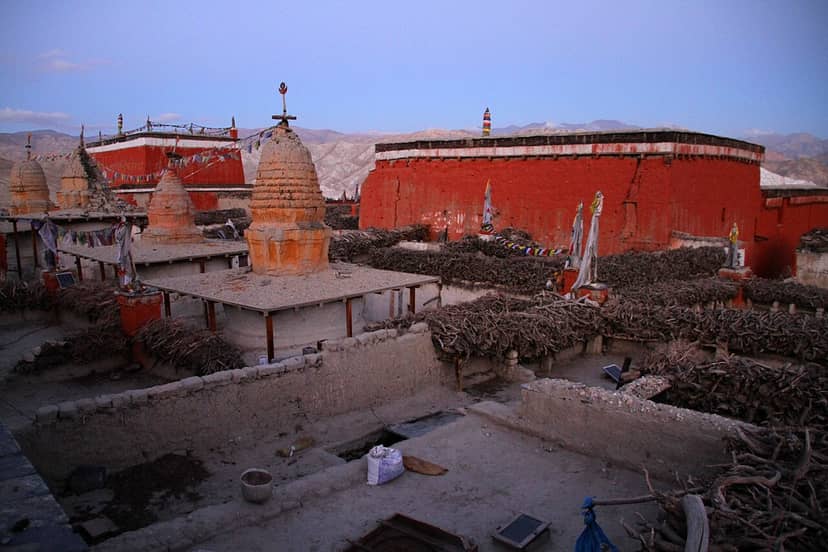
Places such as Upper Mustang, Manaslu, Tsum Valley, Nar Phu, Dolpo and Kanchenjunga need a Restricted Area Permit. These have long required a registered agency and a licensed guide.
Several 2026 sources report a change: since March 2026, a single trekker can get a restricted area permit, where previously at least two were needed. This doesn't mean you can go alone. The permit is still arranged through an agency, and a licensed guide is still required. One guide can reportedly lead up to seven trekkers.
Why a guide is worth having anyway
- Safety: guides are trained to watch for altitude illness and know where to turn around. The FCDO warns of real hazards above 3,000 m, including sudden weather changes, avalanches and landslides.
- Emergencies: mobile coverage can be limited in remote areas, and a guide knows how to organize help.
- Logistics: permits, lodges in peak season and transport are all easier.
- Culture and language: you learn far more about the places you walk through.
- Local jobs: your money directly supports mountain families.
Choosing a guide safely
The FCDO advises using a reputable agency or guide. It also reports cases of guides taking inexperienced trekkers too high too quickly, then calling expensive helicopter evacuations from which they took a cut. So ask questions:
- Is the agency registered, and is your guide licensed?
- Has the guide had wilderness first aid training?
- How many acclimatization days does the itinerary include?
- What's the plan if someone becomes ill?
- Are the guide and porters insured and properly equipped?
- How is a helicopter evacuation decided, and who confirms it with your insurer?
What about a porter?
A porter carries your main bag, while a porter-guide carries some weight and also helps with the route. Ask whether this person is licensed if you're relying on them to meet the rules. And check weight limits, which protect them from injury.
If you still want to go independently
Some trails aren't on the listed routes, and independent travellers still report walking in some regions. If you're considering this, do these things first:
- Check the latest rules with the Nepal Tourism Board and with the local authority for that region.
- Check that your travel insurance covers you if you trek without a guide. Don't assume it does.
- Be ready for a checkpoint to turn you back.
- Don't trek alone. The FCDO advice on this is direct.
What does a guide cost?
One 2026 operator breakdown lists about US$25 to US$35 per day for a licensed guide and US$20 to US$25 per day for a porter, with tips on top. These are usually built into a package. Sharing a guide within a small group brings the cost down. Reports also say one guide can lead up to seven trekkers in restricted areas.
When comparing prices, ask what the daily rate covers, including the guide's meals, lodging, insurance and transport.
What a guide won't do
A guide can't make you acclimatize faster, and can't guarantee that you'll reach your goal. They also don't replace your own responsibility for honest reporting of symptoms, good preparation and proper insurance. If a guide pushes you to continue while you feel unwell, say no. The US Centers for Disease Control and Prevention says you should never go higher to sleep with symptoms of altitude illness.
Common questions
Will someone actually check?
Reports say checks vary by region and checkpoint. Restricted areas are the most strictly controlled, because the permit itself depends on an agency. Don't plan on the assumption that you won't be checked.
Is a porter enough?
The UK government's wording refers to a local guide or porter, but other sources say a licensed guide specifically. Ask a registered agency and check before you rely on it.
Can I still trek alone with a guide?
Yes. Going as one person with a private guide is common, and sources report that solo trekkers can now get restricted area permits this way too. Check the latest rules with your agency.
Does my insurance care?
It might. Some policies have conditions relating to guides, altitude or local laws. Read your policy or ask your insurer in writing.
Where can I check the current rule?
Ask the Nepal Tourism Board, and in restricted areas, the Department of Immigration. For the Everest region, the local authority's office in the area can also advise you. Keep copies of what you're told.
Our view
Yes, we sell guided trips, so bear that in mind. Even so, for almost everyone, and especially first-time visitors, a licensed guide is the safer and simpler choice.
Next, read our permit guide or ask us about guided trips.


Comments