
How many people die on the trek?
We couldn't find an official count. Trek deaths aren't tracked in the way that summit deaths are, and the well-known Everest death figures you'll see online mostly refer to climbers on the mountain, not trekkers. One outfitter estimates two to four trekker deaths per year, but it says there are no official statistics, so treat that as a rough estimate. Anyone quoting a precise percentage risk for this trek should be able to tell you where it came from.
The main risks
1. Altitude illness
This is the risk that matters most. Acute mountain sickness can progress to high-altitude cerebral edema (HACE) or pulmonary edema (HAPE). The US Centers for Disease Control and Prevention (CDC) describes both as serious, and says descent is urgent for HAPE and should begin for anyone suspected of HACE. Read our full altitude sickness guide.
How to reduce it: choose an itinerary with proper rest days, never go higher to sleep with symptoms, and speak up early.
2. Flights to Lukla
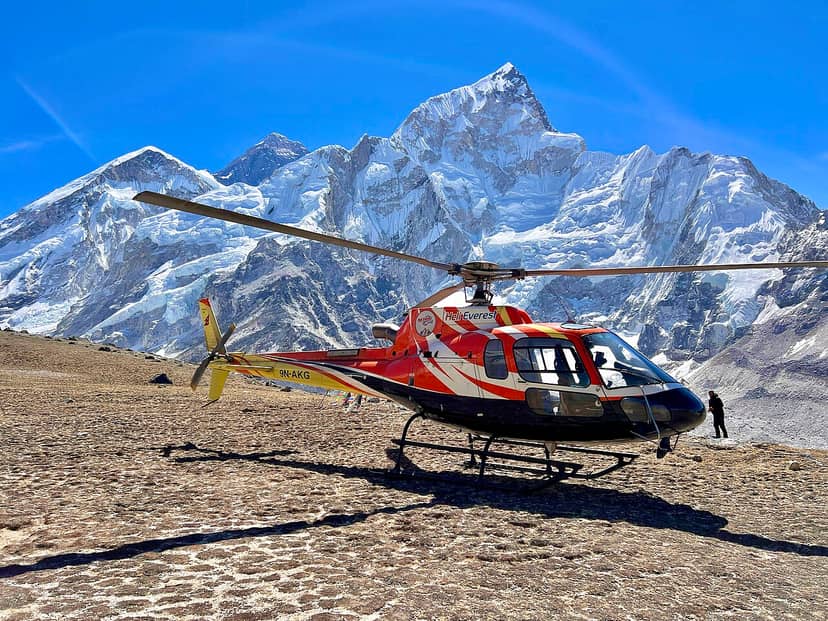
Lukla's short, sloping mountain runway is famously demanding. The UK government notes multiple fatal air crashes in Nepal, with at least 100 deaths over the last five years, and says no Nepali airline currently meets international safety standards. All are on the UK Air Safety List. Mountain flights are also often delayed or cancelled by weather.
How to reduce it: don't pressure anyone to fly in poor weather, build in spare days, and consider the longer overland Jiri route if flying is a major concern.
3. Weather and cold
The UK government warns of hazards all year, particularly above 3,000 m, including sudden weather changes, snow drifts and avalanches. Snow can arrive suddenly even in the main seasons, and temperatures fall well below freezing at night at higher villages.
How to reduce it: carry proper layers, follow your guide's advice, and choose autumn or spring for more settled conditions. See our season guide.
4. Rockfall, landslides and avalanches
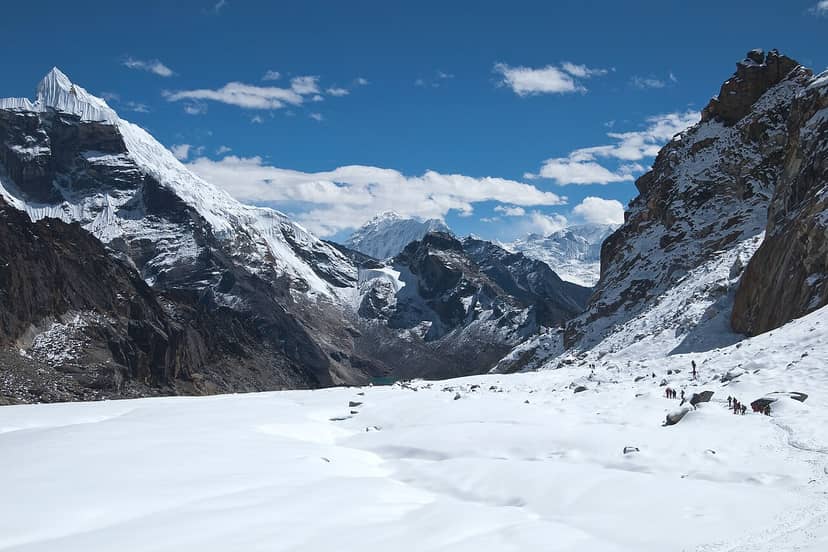
Parts of the trail cross unstable slopes, especially near Lobuche and on the moraine above it. In 2014, an avalanche killed Sherpa climbing staff in the Khumbu Icefall, and in 2015, the Nepal earthquake triggered a deadly avalanche at Base Camp. Those were rare, extreme events, and trekkers don't normally enter the Icefall, but they show that this terrain is unforgiving.
How to reduce it: don't linger under loose slopes, and follow your guide when they want to move quickly or wait. Check your operator's earthquake and emergency plans, as the UK government suggests.
5. Trail hazards
Most injuries are ordinary: slips on steep descents and ice, and being knocked by yaks or pack animals on narrow paths. When animals pass, always stand on the uphill side, away from the drop.
6. Illness
Stomach bugs and the dry-air cough are common. They make the trek harder and can make it difficult to tell what's causing your symptoms. Treat your drinking water, wash your hands, and be careful with food if you're unsure about it.
7. Being far from help
Medical care on the trail is limited. The UK government says healthcare is poor in most places outside the Kathmandu Valley and Pokhara. The Himalayan Rescue Association runs an aid post at Pheriche in the main seasons, but it's not a hospital. Evacuation depends on weather and communications.
A safety scam to know about
The UK government warns of isolated reports of guides taking inexperienced trekkers too high too quickly in order to trigger costly helicopter evacuations. Be wary of unusually cheap deals. Check that your operator is reputable, and ask how the decision to evacuate is made. Your insurer should be contacted before a non-urgent flight whenever possible.
Trekking versus climbing
| Everest Base Camp trek | Climbing Everest | |
|---|---|---|
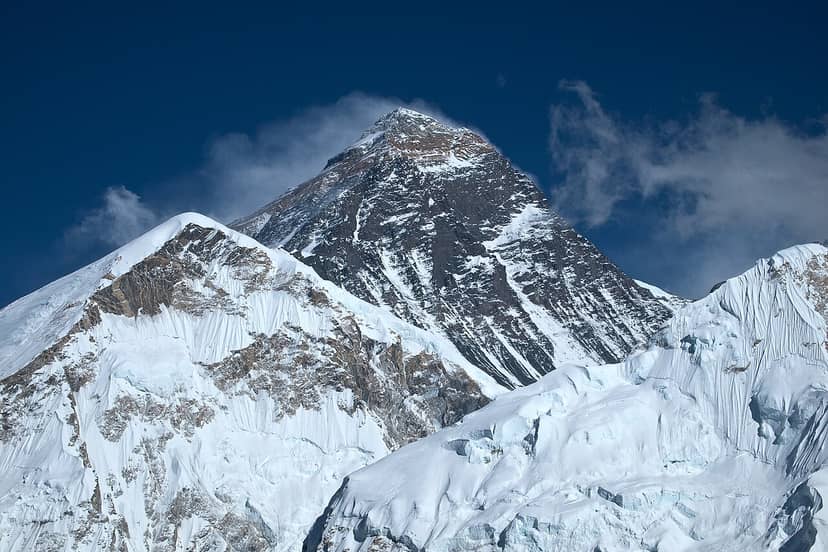
| Highest point | About 5,545 m at Kala Patthar | 8,848 m |
| Skills needed | Walking, no ropes | Mountaineering experience |
| Bottled oxygen | Not routine | Commonly used high up |
| Khumbu Icefall | Not on the route | Must be crossed |
This is why summit death statistics can't simply be applied to trekkers.
Your safety checklist
- Choose an itinerary with at least two acclimatization days.
- Use a reputable operator and a licensed guide with first aid training.
- Buy insurance covering this altitude and helicopter evacuation. See our insurance guide.
- See a doctor before you travel, and ask about altitude medicine.
- Keep spare days, so you never feel you have to rush or fly in poor weather.
- Tell your guide about every symptom, and agree a plan in advance for turning back.
- Carry warm clothing, sun protection and water purification.
- Leave your itinerary with someone at home, and agree how often you'll check in.
Common questions
Is it safe to trek alone?
The UK government's advice is, "Do not trek alone." Read our guide to the current rules.
Is it safe for older trekkers or families?
It can be, with medical advice and a slower plan. Children and people with health conditions need extra care, and a lower route may suit better. The Everest Panorama Trek stays under 4,000 m.
Would I be rescued in bad weather?
Helicopters can't fly in every condition, which is why going down on foot, or by being carried, may be necessary. Don't assume that a helicopter can always come.
Warning signs to act on straight away
Everyone in a group should know these. Tell your guide and stop going up if you notice:
- A headache along with nausea, dizziness or unusual tiredness
- Breathlessness that doesn't settle when you rest
- A persistent cough, or chest tightness
- Confusion, drowsiness or unsteady walking
- A friend who suddenly seems "not themselves"
Confusion, unsteady walking and breathlessness at rest are emergencies. The US Centers for Disease Control and Prevention says that descent should begin for suspected HACE, and that it's urgent for HAPE.
Questions to ask your operator
- What happens if I can't continue? Who stays with me?
- Do guides carry a first aid kit, a way of checking oxygen levels and any emergency oxygen?
- How do you contact help where there's no mobile signal?
- Do you use spare days for weather, and what happens if flights are cancelled?
- What are your plans for an earthquake or a big snowstorm?
- How do you make sure porters have safe loads and warm clothing?
A good operator should answer these without hesitation. If they brush off safety questions, keep looking.
Next steps
Read how hard the trek is, see our day-by-day itinerary, or ask us how we plan for safety.


Comments