
1. Go boating on Phewa Lake
Rent a colourful wooden boat from Lakeside, and row across calm water towards Tal Barahi Temple on its small island. On clear days, Machhapuchhre, the Fishtail, and the Annapurna range reflect above the lake. Boat rentals are easy to find, so agree the price and time before you set off, and ask for a life jacket.
2. Watch sunrise from Sarangkot
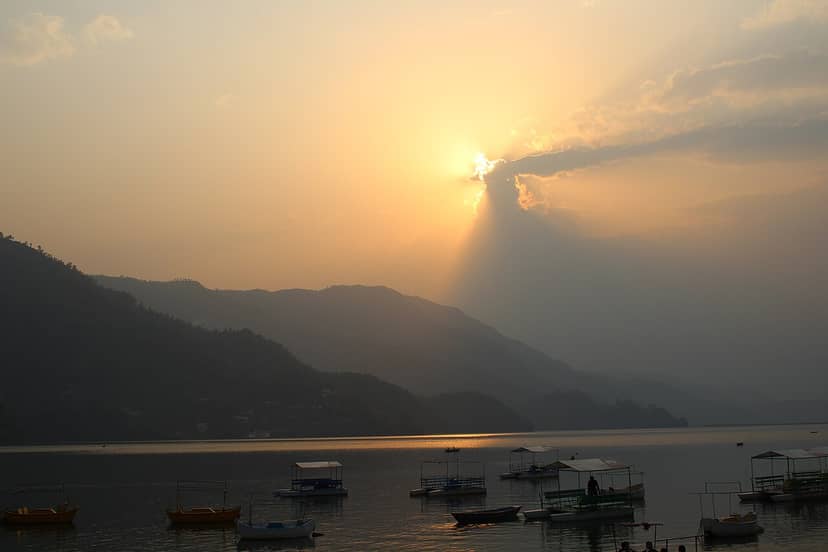
Sarangkot, a hill above the lake at about 1,592 m, is a classic sunrise viewpoint. Drive or hike up before dawn for views of the Annapurnas and Dhaulagiri. Mornings are often clearest from October to March, and clouds are common in summer.
3. Walk up to the World Peace Pagoda
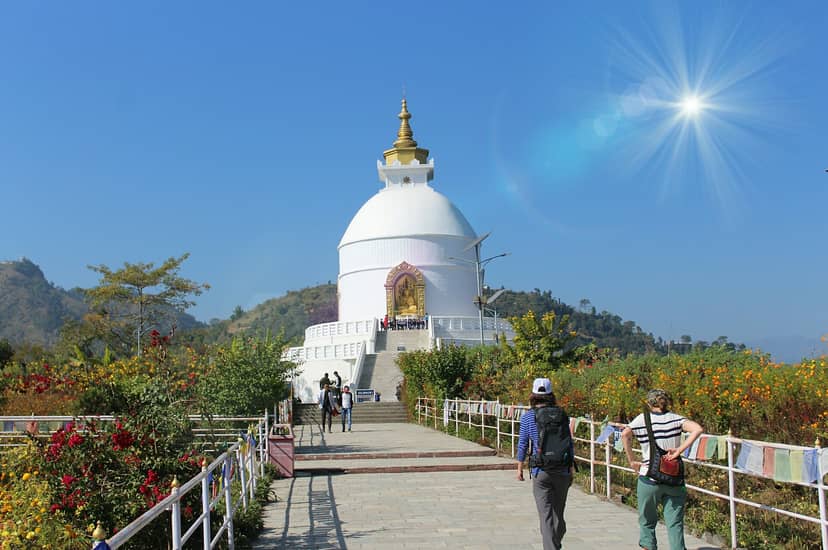
This white Buddhist stupa sits on a ridge above the far side of the lake. One guide says it's free to visit. You can reach it by boat and then hike, or by road. It's a lovely spot at sunset, with sweeping views over the lake and town.
4. Try paragliding
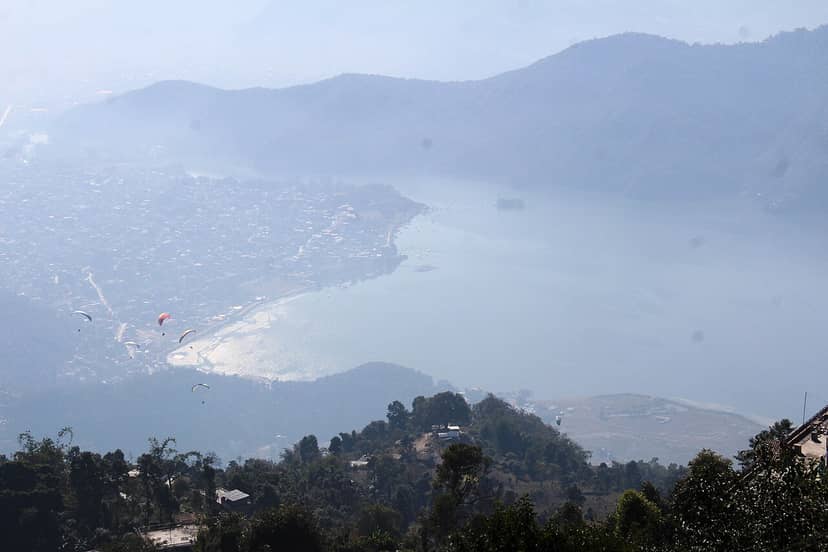
Tandem flights from Sarangkot, landing near the lake, are Pokhara's signature adventure. You don't need any experience. Flights depend on the weather, so keep a spare day. Our paragliding trip has more details.
Safety matters. Research the operator, ask about the pilot's licence and equipment, and check what your insurance covers. One guide reports past accidents, though we couldn't verify its figures, so don't simply pick the cheapest offer.
5. Visit Davis Falls and Gupteshwor Cave
These two sites sit across the road from each other. Davis Falls, also called Devi's Falls, is at its most powerful in the monsoon, while Gupteshwor Mahadev is a sacred cave with a Shiva shrine. One blog reports low entry fees of about NPR 30 and NPR 100, although these may have changed. If you only do one, many people prefer the cave.
6. See the International Mountain Museum
This museum covers the history of Himalayan mountaineering and the people of the mountains. It's a good rainy-day option and helps you understand the peaks you'll see. Check opening hours and fees locally.
7. Explore Old Pokhara
Most visitors stay in Lakeside, but Old Pokhara has historic temples and quieter streets. It's a nice change after the tourist shops and cafes, and it gives you a look at everyday life in the city.
8. Try zipline and other adventures
Operators run a zipline from Sarangkot, starting at about 1,592 m, and some advertise it as the world's longest or steepest. We haven't verified those claims. If you're looking for more, ask about mountain biking, kayaking or rafting on the Trishuli on your way to or from Pokhara.
9. Start a short trek
Several great short treks begin nearby:
- Ghorepani Poon Hill: a classic sunrise trek
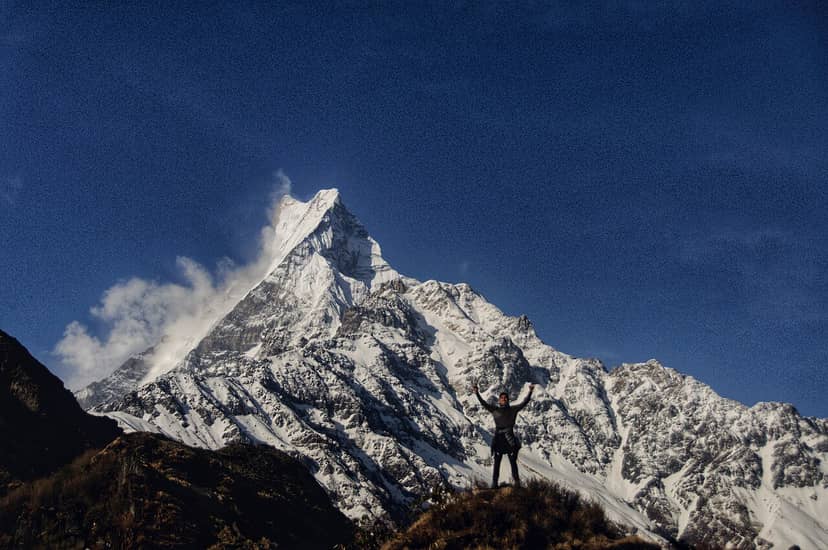
- Mardi Himal: a ridge walk beneath the Fishtail
- Mohare Danda: a quieter community trek
- Annapurna Base Camp: a bigger adventure into the Sanctuary
10. Relax on Lakeside
After a trek, Lakeside's cafes, massage places and gear shops are hard to beat. It's a great place to rest your legs, enjoy a good meal and sort your photos.
A simple two-day plan
| Morning | Afternoon and evening | |
|---|---|---|
| Day 1 | Sarangkot sunrise, then the Mountain Museum | Davis Falls and Gupteshwor Cave, then sunset on Lakeside |
| Day 2 | Paragliding, if the weather's good | Boat across the lake to Tal Barahi, then hike to the Peace Pagoda |
Our Pokhara Lakeside Tour covers most of this at a relaxed pace.
Getting there
You can fly from Kathmandu or take a tourist bus, which takes most of a day. The UK government says tourist buses generally offer better safety than crowded local buses, and it advises against night travel. Flights may be delayed by weather.
When to go
Autumn and spring offer the most comfortable weather, and mountains are usually clearest from October to March. In the summer monsoon, expect rain and clouds, though the falls are at their best. See our season guide.
Where to eat and spend your evenings
Lakeside has plenty of choice, from local dal bhat and momos to international cafes and bakeries. It's a lively place to spend an evening, and many places have live music. Try a local restaurant at least once, and don't forget to try the thakali set, a Nepali meal associated with the Mustang region's Thakali people.
Good to know
- Cash: cash machines are easy to find here, so stock up before you go trekking.
- Gear: Lakeside has many trekking shops, for last-minute rentals and purchases.
- Weather: mornings are usually clearest, so plan your mountain views early in the day.
- Safety on the water: wear a life jacket, and avoid boating in bad weather.
- Adventure activities: check your insurance before you paraglide, or try a zipline.
- Keep your valuables safe: take normal care in busy tourist areas.
Common questions
How many days should I spend in Pokhara?
Two or three days is enough to see the main sights. Add more if you're planning to paraglide, since weather can delay your flight, or if you just want to rest.
Can I see the mountains from the city?
Yes, on clear days. Machhapuchhre and the Annapurnas can look close, particularly in the morning.
Is Pokhara good for families?
Yes. It's calmer than Kathmandu, with easy boating, short walks and plenty of places to eat.
Where should I stay?
Most visitors stay in Lakeside, for its convenience. Those wanting quiet could look further along the lake or on the hillsides.
Next steps
Combine Pokhara with Kathmandu and Chitwan on our Nepal Highlights Tour, or ask us to help plan your stay.


Comments